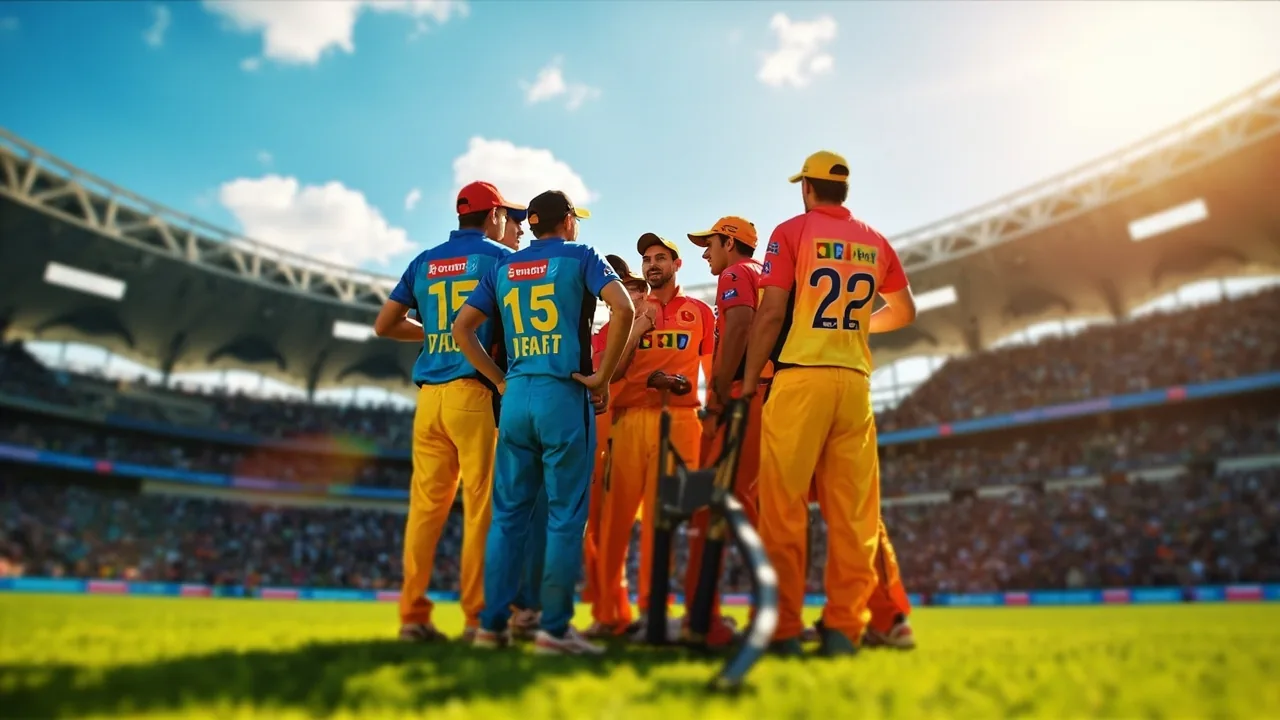
Chennai Super Kings
Form: Win 3 / Loss 2 last five
Open questions: Powerplay aggression rate, second-seamer rotation
Desk read: Home advantage strong at Chepauk; dew is the captain pivot.
Open CSK desk →Each IPL franchise plays its own cricket. The team pages bring together squad shape, role questions, venue reads and the captain matrix inputs that actually differ team to team.
Chepauk's spin economy, the death-bowling question and the opening combination.
MIBumrah workload, top-order aggression, middle-overs matchups.
RCBDeath-overs plans, spin options, possible XI churn.
KKREden pace-friendly reads, middle-overs spin, impact-player slot.
SRHPowerplay aggression, death-overs depth, possible changes.
GTAhmedabad deck reads, top-order insurance, spin rotation.
RRSawai Mansingh read, allrounder depth, top-order questions.
DCKotla behaviour, pace battery, captaincy picture.
LSGEkana read, balance between spin and pace, XI churn.
PBKSMohali chase factors, allrounder pair, powerplay plan.
Each franchise desk is structured around the same nine inputs — squad shape, recent form, venue, captaincy, workload, role questions, likely XI, ownership patterns and notes from the latest net session. The structure is identical; the substance is specific to the team.
Yes. All ten IPL 2026 franchises have a desk. We do not write a generic 'all teams' page — every franchise deserves its own read.
Our most-consistent franchise reads are CSK, MI and KKR. The Gujarat Titans desk grew fastest in 2025 — the venue at Ahmedabad is the most analytically interesting in the league.
Form: Win 3 / Loss 2 last five
Open questions: Powerplay aggression rate, second-seamer rotation
Desk read: Home advantage strong at Chepauk; dew is the captain pivot.
Open CSK desk →Form: Win 2 / Loss 3 last five
Open questions: Bumrah workload, top-order balance
Desk read: Bumrah's overs budget is the single biggest Wankhede variable.
Open MI desk →Form: Win 3 / Loss 2 last five
Open questions: Death bowling options, spin choice at Chinnaswamy
Desk read: Batting depth covers bowling questions; spin pick at the toss matters.
Open RCB desk →Form: Win 4 / Loss 1 last five
Open questions: Middle-overs consistency, impact-player choice
Desk read: Eden dew is the desk's most consistent chase-friendly read.
Open KKR desk →Form: Win 3 / Loss 2 last five
Open questions: Powerplay aggression cap, death overs
Desk read: Uppal is the venue that rewards the powerplay specialist.
Open SRH desk →Form: Win 3 / Loss 2 last five
Open questions: Top-order insurance if early wickets
Desk read: Ahmedabad's flat deck rewards the opener; spin rises late.
Open GT desk →Form: Win 2 / Loss 3 last five
Open questions: Top-order questions, allrounder rotation
Desk read: Saw Mansingh's spin-friendly read rewards wrist-spinners.
Open RR desk →Form: Win 2 / Loss 3 last five
Open questions: Captaincy picture, pace battery
Desk read: Kotla's behaviour read changes week to week — the captain matrix shifts accordingly.
Open DC desk →Form: Win 1 / Loss 4 last five
Open questions: Balance issues between spin and pace
Desk read: Ekana has the highest dew rate in the league; chase is the call.
Open LSG desk →Form: Win 3 / Loss 2 last five
Open questions: Allrounder pair consistency, powerplay
Desk read: Mohali's chase bias rewards a different captain pool than other venues.
Open PBKS desk →Gaikwad confirmed through the back half of the schedule. The leadership read is conservative.
Open questions: Will the franchise hold the rotation open until late-season?
Desk read: The captain pool sits with the spinners and the anchor. Powerplay aggression on a slow deck relies on the captain sticking to the established combination.
Hardik confirmed as captain with workload-led rotation on Bumrah and a senior pace allrounder.
Open questions: Will the death-overs plan allow for the senior bowlers to share rather than rotate?
Desk read: The captain matrix depends on the sharing plan. Watch the second-innings bowling order; the captain's intent is visible there.
Faf or a younger alternative — the captaincy picture is the most open in the league.
Open questions: What is the franchise's preferred XI split at Chinnaswamy?
Desk read: The captain call is the highest-leverage decision at RCB. The team's batting depth covers bowling questions.
Ajinkya-style anchor role with an aggressive top-order around him.
Open questions: Will the impact-player slot favour batting depth or a bowling allrounder?
Desk read: Eden's dew is consistent — the captain's call on the chase makes the difference.
Aggressive top-order captain — the read is powerplay-led.
Open questions: Does the captain trust the middle order if early wickets fall?
Desk read: Uppal's flat deck rewards powerplay aggression. The captain's intent is to put pressure on the bowler before the dew kicks in.
Sudharsan-style anchor with Sai as the rising catalyst.
Open questions: Will the franchise favour spin depth or pace variety?
Desk read: Ahmedabad's flat deck is the highest-scoring on average; the captain trusts the top three to set the total.
Yashasvi or Sanju — open reading on the captain's mood.
Open questions: What does Sawai Mansingh read for the captain matrix?
Desk read: The captain's role shape is the question mark. Read the toss carefully for the spin intent.
Axar or a senior Indian — read varies by match.
Open questions: How does Kotla's read change week to week?
Desk read: The captain matrix updates every match on this franchise; the desk reads more like a flow than a trend.
Nicholas Pooran or KL Rahul — franchise-led choice.
Open questions: Will the captain trust Rahul as anchor or as aggressor?
Desk read: Ekana's chase record demands clarity on the role. The captain's read is pivotal.
Shashank or an overseas captain — TBD.
Open questions: Does the captain trust the allrounder pair at Mohali?
Desk read: The captain matrix leans on the allrounders at this franchise. The desk reads the two pairs side by side before any captain call.
Chepauk is the only IPL venue where the home team wins the toss and bowls first in 70 percent of matches. The captain's intent at this venue is clear: hold the bowling options for the second innings, when the dew and the turn align. The squad's wrist-spinners get a role share boost here that they don't get elsewhere.
The away sides play Chepauk with a different team shape — pace-heavy XIs struggle, spin-heavy XIs read better. The captain matrix here rewards the visiting spinners and the home batters who can rotate against the visiting wrist-spin attack.
Eden's chase record is the most lopsided in the league at this moment — chasing teams have won 5 of the last 6 matches here. The captain's intent at Eden is unambiguous: bowl first if you win the toss. The dew reading is so reliable that the captain matrix trusts the chase over 80 percent of the time.
The visiting side captain at Eden has the most interesting tactical dilemma — to bowl first and back the dew, or to bat first and rely on the chase-friendly deck. We have seen both; the read leans chase. The captain matrix here rewards the chasing side's top-order and the bowling side's middle-overs spinners.
Wankhede reads flatter and faster than most IPL venues. The captain matrix at Wankhede favours the side batting first — the highest first-innings totals in the league are posted here. The home side's batting depth means the captain can afford to play extra bowlers without compromising the chase.
The visiting captain at Wankhede often picks a finger-spin heavy XI to slow the run rate. The captain matrix here rewards the top-order anchor and the wrist-spinner who can take wickets at the death.
Chinnaswamy is the highest-scoring venue in the league. The captain matrix at Chinnaswamy is built around the powerplay — the venue rewards the team that puts pressure on the bowler in the first 6 overs. The chasing side wins 60 percent of matches here despite the flat deck.
The captain's reading at Chinnaswamy depends on the chase plan — bat first and post 200 is the safer route; chase and keep wickets in hand is the differential route. The captain matrix here is the widest in the league because the role split is so open.