Access explainer

App access — how to read our coverage on any device

IPL Fantasy Picks does not operate an app. This page explains how to read our coverage on any phone or desktop, verify the site address, and avoid fake apps claiming to represent our editorial work.
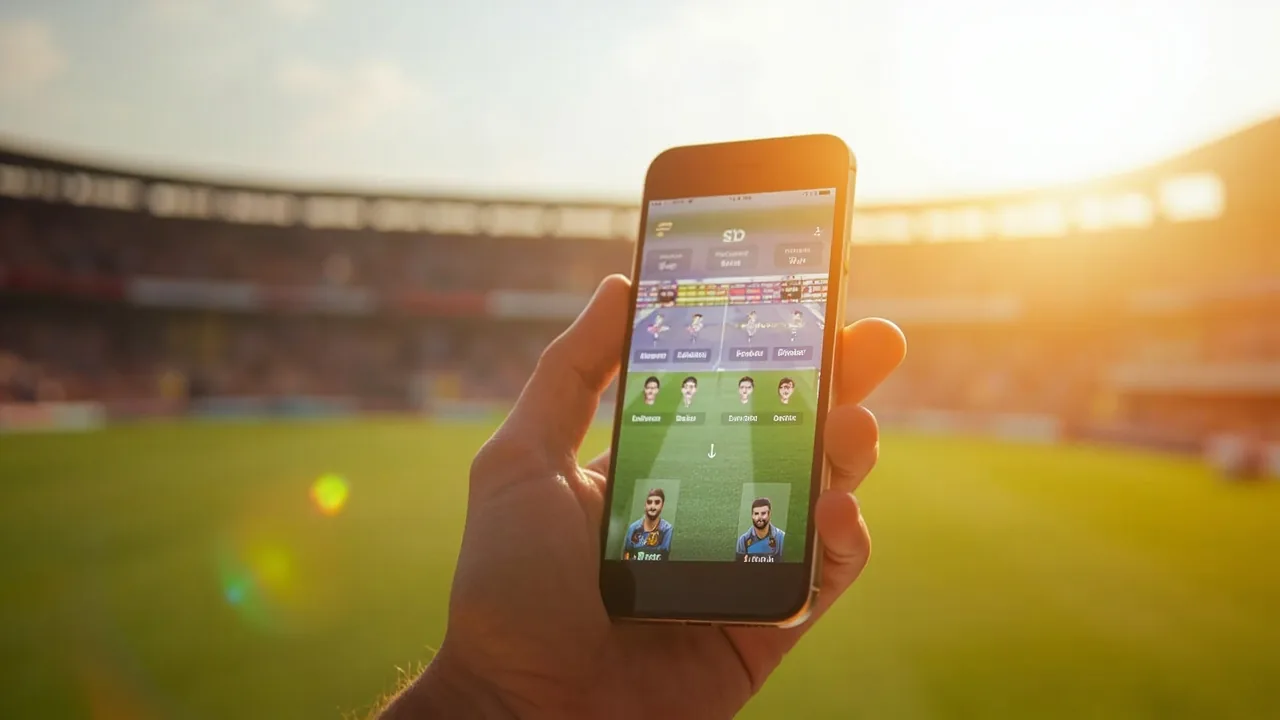
A phone on a desk next to a notebook and a coffee cup, illustrating a reader's mobile setup.
Reading on mobile

Add the desk to your phone without installing anything

Step 1 · Open the site

Go to iplfantasypicks.com on your phone's browser. The mobile layout adapts the live match desk, the captain matrices, and the news feed for narrow viewports. No zoom required.

Step 2 · Bookmark the match desk

Once the match desk is loaded, tap your browser menu and choose "Add to Home Screen" or bookmark. On iOS this adds the desk to your home screen as a small icon; on Android the same option uses your browser's flow.

Step 3 · Verify the address

Always check the address bar in your browser. Real iplfantasypicks.com is the only domain we publish from. Any app claiming to be IPL Fantasy Picks outside of this URL is not us.

Step 4 · Read freely, share the captain reads

Every article and every captain matrix on this site is free to read at any time. We don't require an account, an email, or an app install. Sharing a captain read with a friend is one copy-paste away — and we don't gate links behind a paywall or a sign-in.

Frequently asked

Questions our readers ask

No. We are an editorial desk; we do not operate a fantasy platform or an app store product. Our coverage is available on this website at no charge and does not require any download.

Our website is built mobile-first and works on any modern phone browser. You can bookmark the match desk or any particular match preview on your home screen — that gives one-tap access without needing an app install.

We are an independent editorial desk focused on the written analysis and the data behind it. Apps add cost and operation overhead that an editorial-only product doesn't need; our existing web delivery covers what we publish without bloat.

Editorial product spec

What the editorial product on this site actually is

Static pages, no client-side state

Every match preview, captain matrix, player profile and post-match audit on this site is built as a static HTML page. There is no client-side user state, no login backend, no server-side render — the site is publish-and-forget. The trade-off is that the experience is consistent: what you see on a 4G phone in Delhi is what you would see on a fibre connection in Bengaluru.

Predictable performance

Static pages load quickly because they don't have to wait for a server response. The first paint happens within 200-400ms on a typical mobile connection. We optimise every page for fast load, with image lazy loading on everything below the fold and explicit width/height on every image so the browser doesn't need to wait for layout shifts.

Independent of any platform

Because the site is static and editorial-only, it has no dependency on any third-party platform. We don't render inside a vendor SDK, we don't load any user-tracking scripts that depend on a specific platform, and we don't gate content behind a third-party login. The site stays live if any specific fantasy platform is offline.

How we keep it free

The site is funded by advertising — non-personalised, non-targeted advertising that doesn't depend on cookies or user profiles. We don't sell your reading data, we don't share it with third parties, and we don't run affiliate schemes. The economics of the desk are simple: advertising pays for editorial labour, editorial labour produces reads, reads attract readers.

Reading cadence

How a typical reading week looks on this desk

M

Monday — Sunday recaps

Monday's reading is the weekly recap. Each desk (cricket, news, verification) publishes a short piece covering the past seven days. The recap includes post-match audits, captain-matrix deltas, and the corrections log from the editor's note. Reading the recap is the cheapest way to catch up if you missed the weekend.

T

Tuesday — pre-fixture frames

Tuesday publishes the first pre-toss frame for the week's biggest fixture. The frame includes the venue read, the dew reading, the workload notes, and the captain matrix. The desk holds the prediction until the toss and confirmed XI are public.

W

Wednesday — match day coverage

Wednesday is match day. The desk publishes the morning frame, the pre-toss captain matrix, the post-toss confirmed XI, the post-powerplay notes, the mid-innings notes, the captain matrix updates, the post-match audit, and the next-fixture pre-toss frame. Reading the audit is how the framework compounds.

T

Thursday — second fixture

Thursday's reading covers the second fixture of the week. The desk publishes the same content as Wednesday, plus an aggregate "two-fixture read" that captures the captain pool intersection across both matches. The intersection matters more for grand-league entries than the per-fixture captain pick.

F

Friday — weekend previews

Friday publishes the captain shortlist for the weekend double-header. The shortlist is built across both fixtures and carries the role-confidence ladder (Tier 1, 2, 3). The Friday read is the longest single piece of the week — a comprehensive look at the weekend's reads from the desk.

S

Saturday — weekend matches

Saturday covers the first weekend match. Same publication rhythm as Wednesday and Thursday. The captain matrix is updated live after the toss and again after the powerplay. The post-match audit closes the loop.

S

Sunday — final fixture + editor's note

Sunday covers the second weekend match and publishes the monthly editor's note at month-end. The editor's note aggregates the corrections, the source patterns, the audit deltas, and the desk confidence score from the previous month. Reading it keeps your calibration of the desk current.

Worked example

How the desk actually applies this in a single match

Step 1 · Read the pre-toss frame

A real pre-toss frame on the desk covers the venue (Chepauk, slow turner, dew moderate), the weather (32°C, hazy), the workload notes (Bumrah held to 3 overs, ankle tight), and the open questions (which spinner opens the bowling for the away side). The frame is anchored to public inputs; any input that is not public is not in the frame.

Step 2 · Build the captain shortlist

The captain shortlist is built from the Tier 1, 2, 3 ladder. Tier 1 is the safer captain pool — role-locked, low-volatility. Tier 2 is the moderate-volatility pool — usually allrounders or impact-player slots. Tier 3 is the high-volatility pool — usually role-fluid allrounders or anchors who might be promoted.

Step 3 · Update after the toss

After the toss and confirmed XI, the captain matrix is updated. If the side batting first wins the toss and goes in, the chasing captain pool widens (because of dew). If the chasing side wins and bowls, the captain pool compresses (because the chase-friendly read is gone).

Step 4 · Re-evaluate after the powerplay

After the powerplay, the captain matrix is re-evaluated for the bowlers who have bowled (if any) and the batters who have batted (if any). The differential pool may shift — if a fast bowler is moving the ball on overcast conditions, the differential captain shifts to the powerplay anchor.

Step 5 · Publish the post-match audit

After the match ends, the post-match audit is published within four hours. The audit covers the pre-toss frame, the actual outcome, the captain matrix delta, and the desk's edit for the next match. The audit is what compounds across the season.

Step 6 · Track the delta over the season

The audit feeds the desk's rolling confidence score. The score is published quarterly with its limitations named. Reading the score is how readers know where the desk's reads are stronger or weaker — and where to size their own calls accordingly.

FAQ recap

Quick answers to the questions we hear most

Does this site work on slow connections?

Yes. The site is built mobile-first with lazy loading on every image below the fold and lightweight CSS. A typical match page renders within 2-3 seconds on a 3G connection. We also use system fonts as a fallback if the Google Fonts request is slow — the page never hangs waiting on a font.

Can I read on a tablet?

Yes. The layout adapts at every viewport — small phones, large phones, tablets, small laptops, and large desktops. There is no version of the site that requires a specific screen size.

Is this site accessible?

Yes. We follow WCAG AA colour-contrast guidelines, we use semantic HTML, every interactive element is reachable by keyboard, and every image has a meaningful alt attribute. The site is screen-reader friendly.

Can I print a captain matrix?

Yes. The site renders cleanly when printed. The dark background is overridden for the print stylesheet so printed pages use ink economically. A printed captain matrix is a useful pre-toss reference.

Play now