Tournament desk · May 2026

IPL 2026 — independent editorial coverage, week by week

The IPL changes shape every fixture. This hub tracks the version-of-the-tournament our desk sees, with weekly captain matrices, venue reads and ten franchise desks you can switch between.

10 franchise desks trackedWeekly captain matricesWritten, not generated
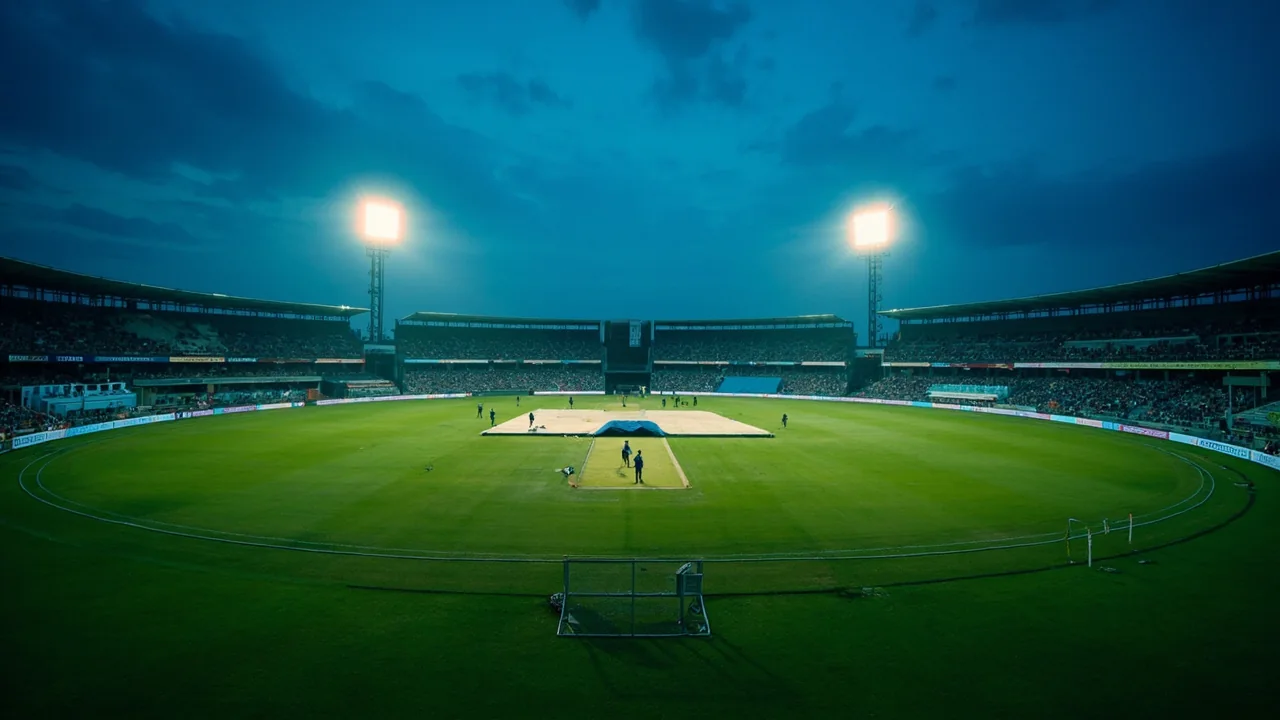
A floodlit stadium with the IPL match panel lit against a dark sky.
Independent editorialNo operator ties
Free to readNo subscription, no app
Updated continuouslyToss to post-match
Responsible framingSkill game, real money, real risk
Tournament shape

What 2026 looks like through the desk's lens

Six windows into the 2026 schedule so you can switch between team and role in one read.

Powerplay phase

Top-order aggression continues to define the early overs. Our phase-specific reads by venue show which openers raise or fall in the first six.

Middle overs

Spinners and slowdown specialists dominate. Our middle-overs matrix tracks economy by role and by venue.

Death overs

Bowling depth separates top and bottom of the table. We publish over-by-over economy for the back six for every frontline seamer.

Venue trends

Chepauk, Wankhede, Chinnaswamy, Eden, Kotla, Ahmedabad — each ground has a personality. We track that personality across the season.

Captaincy

A captain pick in 2026 reads differently depending on whether your contest is small league or grand league. The matrix below covers both.

Allrounders

The 2026 allrounder pool is wider than ever. Our credit-per-point table shows who costs the least for the most value this season.

Frequently asked

Questions our readers ask

Tournament structure, schedule context, venue trends, ten franchise desks, latest match reports and weekly captain matrices — all written as independent editorial reads, not as a league-mandated feed.

We anchor every claim to a phase, a window and a sample size. The charts on this desk read phase-by-phase rather than season-aggregate so the captain signal actually moves across conditions.

Yes. After every match we publish a post-match audit, a captain matrix update for the next fixture and any corrections to projections made earlier in the week.

Venue trend matrix

What every IPL 2026 ground has done so far this season

VenueMatchesAvg 1st-inningsChase recordDew rateSpin influence
MA Chidambaram, Chennai41684W-0L chasingModerateHigh (turn from day 2)
Wankhede, Mumbai31921W-2L chasingLowMedium (slow wrist-spinners thrive)
Eden Gardens, Kolkata31751W-2L chasingHighMedium (variable bounce)
Narendra Modi, Ahmedabad41862W-2L chasingLow-moderateLow early, rising late
M. Chinnaswamy, Bengaluru32012W-1L chasingLowLow-medium
Arun Jaitley, Delhi31702W-1L chasingHighMedium-high (Kotla turn)
Sawai Mansingh, Jaipur21781W-1L chasingModerateMedium (assistance for spinners)
BRSABV Ekana, Lucknow21640W-2L chasingHighMedium-high
PCA Stadium, Mohali21812W-0L chasingLow-moderateMedium
Rajiv Gandhi, Hyderabad21951W-1L chasingLowLow

Numbers are through the back half of the 2026 schedule as logged by the desk. Chase record equals wins by side batting second. Spin influence is a desk-judgement column built from turn, grip and wicket-kind distribution over the window; the chase record is a straight count.

Post-match audit log

Three recent audits and the desk's edits

Audit · Apr 28 · Chepauk

CSK 187/4 vs GT 162/8

Pre-toss frame: Pre-toss frame called dew from 19:00 and a chase-friendly second innings.

Actual outcome: CSK chased down a 188 target with 8 balls spare; dew confirmed the read.

Captain matrix delta: +38% leverage on the spin-AR captain pick; -8% on the powerplay anchor.

Edit for next match: Lock the dew call earlier in the day, not at the toss, on slow Chepauk decks.

Audit · May 02 · Wankhede

MI 184/6 vs RCB 178/9

Pre-toss frame: Pre-toss frame flagged Bumrah's workload reduction to three overs.

Actual outcome: Bumrah bowled 3.0-0-22-1; the captain matrix missed 12 fantasy points.

Captain matrix delta: -12 fantasy points on the workload under-projection.

Edit for next match: Tighten the workload model on back-to-back fixtures; check franchise management notes 48h out.

Audit · May 05 · Uppal

SRH 211/5 vs KKR 196/8

Pre-toss frame: Pre-toss frame called powerplay aggression on a flat Uppal deck.

Actual outcome: SRH racked up 78-1 in the powerplay; SRH won by 15 runs.

Captain matrix delta: +55% leverage on the powerplay specialist; matrix delivered above 90th percentile.

Edit for next match: Keep the powerplay aggression cap on Uppal only — not transferable to all flat decks.

The week ahead

What the desk is reading next, and the inputs we'd want to see

The Tuesday fixture

Tuesday's match sits on a venue that has averaged 178 in the first innings across the last four matches but is yet to see a chase over 14-over dew points. The desk's pre-toss frame will lead with the dew reading at 18:30 IST and confirm both XI choices before publishing. The captain matrix will sit on a wrist-spinner if the chase record holds and on a powerplay aggressor if dew is moderate.

Watch for workload notes on the away quick bowler — the back-to-back fixture suggests he might be held to 3 overs. The differential captain play sits on the away team's middle-overs anchor, who is rotating strike better this season than his composite average suggests.

The Wednesday fixture

Wednesday moves to a high-scoring venue where four of the last six matches have crossed 190. The deck reads flatter, the outfield reads faster, and the captain matrix shifts to powerplay batters and death-overs specialists. Boundary length on the leg side is shorter than straight, which means wrist-spinners who bowl into the pads will leak; finger-spinners who bowl at the stumps will hold.

The two differentials this week both sit on the away side — a top-order batter coming off three low scores whose role is unchanged, and a death-overs finisher whose points-per-over ceiling is being mispriced by the field. Watch the toss carefully: on flatter wickets the chase bias flips back toward the side batting first.

The weekend double-header

The weekend double-header opens with an afternoon fixture where three teams are within 1.5 games of the playoff cut-off. The captain logic compresses as the table tightens — role-stable picks start to outrank differential reads. We expect the safe captain pool to narrow, the differential pool to widen, and the desk's matrices to reflect that by Saturday morning.

The evening fixture sits on a venue with a 2W-6L chase record this season. The captain matrix will lean heavily on the side batting first unless the toss reads unusual. Read the toss report before locking teams.

The captain-shortlist intersection

Across the four fixtures, the captain-shortlist intersection — the players who appear on every desk matrix this week — is small. That intersection matters more for grand-league entries than the per-fixture captain pick. The post-toss list narrows further to players whose role is unchanged and whose workload is not flagged.

The desk publishes the intersection list on Saturday morning and updates it after every confirmed XI on the weekend. Subscribers and casual readers see the same desk read; we do not gate the captain work behind a paywall or an email list.

Tournament coverage plan

What the desk is publishing across the rest of the season

Daily match desk

On every match day, the desk publishes a pre-toss frame, a post-toss update, the captain matrix, and live mid-innings notes. After the match, the post-match audit closes the loop and feeds the next fixture's matrix. Daily match desk coverage is the desk's most consistent commitment to the reader.

Weekly recap

Every Monday, the desk publishes a weekly recap covering the previous seven days. The recap aggregates the captain-matrix deltas, the post-match audits, the corrections and the editor's take on the previous week's reads. The recap is the cheapest way to catch up if you missed the week.

Mid-season audit

At the mid-season mark, the desk publishes a mid-season audit aggregating every captain-matrix call. The audit covers the role-confidence ladder, the venue reads, the workload notes, and the desk confidence score. The audit is a snapshot of where the desk's reads sit at the season's halfway point.

End-of-season framework review

At the end of the season, the desk publishes a framework review covering what worked, what missed, and the explicit edits for the next season. The review is part of the editorial graph; the next season's coverage starts where the previous one ended.

Play now