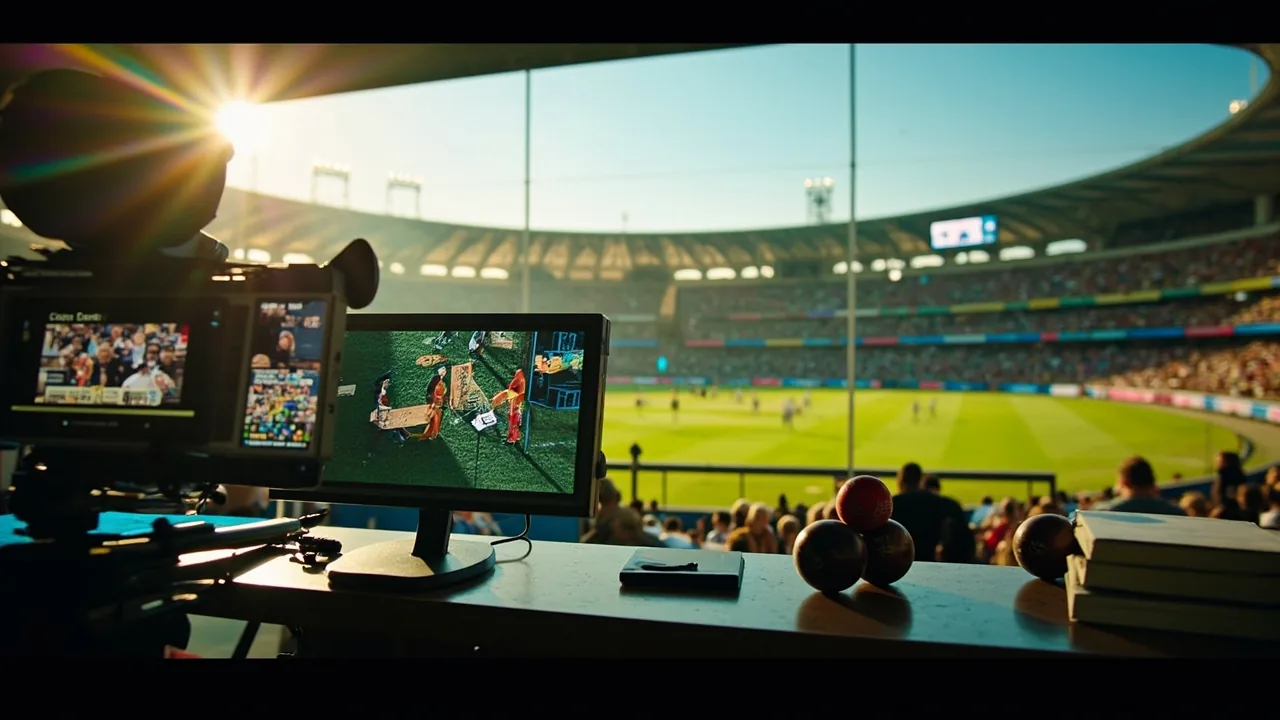
TOSS DUE
MA Chidambaram Stadium, Chennai
CS
Chennai Super Kings
Yet to bat
MI
Mumbai Indians
Yet to bat
Slow turnerPitch
33°C, hazyWeather
Likely after 19:00Dew
Toss leans bat first — chasing has won 7 of 10 here this season.
A durable desk read on the IPL fantasy captain pick when the toss, the dew forecast and the pitch report point three different directions. Three inputs the desk counts, three inputs the desk treats as noise, the lock that sits on the toss, and the cheaper-error rule that decides when the captain pick is held rather than forced. The bounded evergreen explainer the desk ships when no verified current source remains for the captain-matrix frame.
Each match on this desk gets a pre-toss frame, a post-toss update, a captain matrix and an after-action audit. No certainty language, no guarantee framing.
You have a fixed budget and a role cap — top-order batters cost the most, allrounders the most per credit, bowlers the least. The first decision is how to spread credits across roles given your fixture's likely totals and your contest's expected leaderboard distribution.
The captain earns double points, the vice-captain earns double only if the captain does not play. Captaincy is the single biggest swing on your team — it should sit on the player whose role confidence and ceiling sit highest, not on the most famous name.
The toss changes role decisions. A wet outfield may flip a pace pick to a spinner. A confirmed impact-player slot frees credit for an extra batter. The pre-toss team is rarely the post-toss team.
After every match, our desk publishes an after-action audit. We name where the captain logic was right, where it was wrong, and what would have changed the call. Reading the audit is how the framework compounds across a season.
Floor vs ceiling vs ownership leverage vs role volatility. The captain pick comes down to which two dimensions matter for the contest type you are entering.
If you are playing a 3–11 team league, ownership is irrelevant. Pick the player with the highest expected role share and the lowest bench-out risk. We layer three filters: phase-specific strike rate over the last six innings, venue average, and a sanity check on workload.
Today's safer captain candidates read like a marketing-free list: the settled top-order batter on the flatter deck, the death-overs specialist against a powerplay leak, and the spinner if the surface is already taking turn.
See today's full desk picks →A grand-league captain is a captain the field is not on. Read the differential column as "what does the field think is too risky, and is that read right?" If the field is fading a player because of a recent low score and the role has not changed, that player is often the differential.
We annotate every captain candidate with our best estimate of ownership and the percentage of credit you'd need to recover if the pick underperforms. The right differential turns a 20-rank swing into a 200-rank swing.
Read the captaincy framework →
Venue is the most underused input in fantasy cricket. A flat Chepauk deck compresses the difference between a top-order batter and a middle-order batter — both will bat on a true surface — which makes your call about spinners and death pacers the higher-leverage one. A slow Eden Gardens deck does the opposite: the early wickets matter, the middle overs matter more, and you should pay for spin allrounders you would not pay for on a flat deck.
We publish a venue split for every franchise with at least ten recent innings at the ground: phase runs, dismissal kinds, economy by role and dew rate after sunset. The split is updated after every home game and the data window is named on every chart. We do not write copy that says "good form" — every claim is anchored to a phase, a window and a match count.
Dew is the cheat code that nobody tracks. We log dew by venue and by month, and the captain matrix flags it as an explicit lever before the toss.
A season-long average hides the most useful information. A batter who averages 38 with a strike rate of 120 tells you almost nothing about how to captain them tonight. What you actually want is a phase-specific read: powerplay runs, middle-overs strike rate, how often they get out before the 14th over, how often they finish the innings.
Our player pages break the data into six windows: powerplay, middle-overs, death-overs, against pace, against spin, and second-innings batting. The captain matrix reads from these windows and not from a single composite number. A player whose powerplay runs are flat and whose middle-overs strike rate is rising is a different captain pick than a player whose numbers look identical in composite form.
Browse the player index →
Match reports, captain matrices, player reads and verification guides — written by our editorial desk, no third-party promotion in the body copy.
| Action | Standard fantasy points | Why it matters |
|---|---|---|
| Run scored | 1 point per run | +1 |
| Boundary bonus | 4 runs + 4 bonus | +4 |
| Six bonus | 6 runs + 6 bonus | +6 |
| Wicket (pace) | 25 base | +25 |
| Wicket (spin) | 25 base (LBW / bowled bonus) | +25 |
| Maiden over | 4 points | +4 |
| Duck (batter, top-3) | -3 points | -3 |
| Catch | 8 points per catch | +8 |
| Strike rate bonus (run rate ≥ 12) | +6 to bowlers, +4 to batters | +4 to +6 |
| Economy bonus (≤ 6 RPO) | +6 to bowlers | +6 |
Points tables vary by platform. The numbers above reflect the most widely used scoring system in India and what our desk references for captain matrix calculations. Verify against your specific platform's published rules before locking your team.
Full points-system explainer →Toss result, confirmed XI, impact-player choice, weather, dew forecast. We freeze the captain matrix once these are locked. Before that, every pick is "pending post-toss".
Training updates, management quotes from the previous match, net-session reads. Treated as evidence with a confidence tag in the prose, not as fact.
Expected overs by phase, expected batting position, expected matchup frequency. These get a confidence tag and are re-evaluated after the toss and again after the powerplay.
The desk's preferred pick after weighting A, B and C. Always labelled as a lean, never as a guarantee. Each lean comes with the public list of inputs that would flip it.
Every IPL franchise has its own squad shape, venue, batting order and ownership pattern. The team pages bring those inputs together so you stop generalising across teams that play nothing alike.
Chepauk's spin economy, death-bowling questions, opening combination.
MIBumrah workload, top-order aggression, middle-overs matchups.
RCBDeath-overs plan, spin options, possible XI churn.
KKREden pace-friendly reads, middle-overs spin, impact player.
SRHPowerplay aggression, death-overs depth, possible changes.
GTAhmedabad deck reads, top-order insurance, spin rotation.
RRSawai Mansingh read, allrounder depth, top-order questions.
DCKotla behaviour, pace battery, captaincy picture.
LSGEkana read, balance between spin and pace, XI churn.
PBKSMohali chase factors, allrounder pair, powerplay plan.
We do not register users, accept deposits, hold wallets, pay out winnings, or run a referral scheme. Our coverage is editorial. If a quote appears on this site it is editorial commentary, not a betting recommendation.
Whenever a number, a quote or a fixture detail appears, we label it confirmed, reported, projected or editorial lean. We do not publish composite numbers without naming the data window.
When we get an XI, a role projection or a points calculation wrong, we publish a dated correction note at the top of the affected article and in our news feed. Hiding corrections is the easiest way to lose trust.
Fantasy contests can cost real money. Our copy makes the risk visible. We do not use language that implies certainty, guaranteed wins, or income replacement. State laws vary and we ask readers to verify their jurisdiction.
Toss, XI, captain matrix, post-match audit. All on one desk, written by an editorial team that does not run a fantasy platform.
Open the match deskThree franchises face back-to-back fixtures in the next two weeks. Each scenario triggers a workload cap on the frontline bowler and a rotation on one or two batters. The desk tracks the workload tag on every player; the captain matrix adjusts accordingly.
Management notes are typically released 48 hours before each fixture. The notes telegraph the workload tag (rotation, rest, normal, fresh). The desk updates the workload tracker as soon as the note is public; the captain matrix adjusts the same day.
Net sessions are visible from broadcast clips. The desk logs the duration, the number of full-toss spells, and any sign of restriction. The logs feed the captain matrix on the bowler's role share.
After every match, the desk compares projected overs against actual. A consistent under-projection across a 3-match window is the strongest workload signal we have. The tracker is published weekly.
The morning frame includes the venue read, the weather reading, the workload notes and the open questions. Reading the frame takes 60 seconds; it's the cheapest single action you can take on match day.
The captain matrix is built from the pre-toss frame. The matrix carries a confidence tag (high, moderate, cautious, no call) and a one-line "what would change this call". Reading the matrix helps you size the captain pick against the inputs.
The squad announcement comes typically an hour before the toss. The announcement settles the rotation question and confirms the XI. The captain matrix updates as soon as the XI is confirmed.
The toss flips the captain pool on chase-friendly decks. Watching the toss means you can adjust the captain pick if your platform supports a post-toss swap. Watching takes 5 seconds.
Lock the team at the deadline. Most platforms allow a post-toss swap; use it. If your platform doesn't, build the team that handles both possible XIs — the safer captain pool widens to cover both options.
The audit closes the loop. Reading it is how the framework compounds across a season. The audit is brief — under 200 words — and published within 90 minutes of every match ending.
On turning decks, the spin-bowling allrounder is the Tier-1 captain pick and the wrist-spinner is the differential. Read the framework and the role-confidence ladder before you lock.
On flat decks, the powerplay aggressor and the top-order anchor dominate. The differential captain widens with the role-fluid allrounder. Read the deck reading and the workload notes.
In chases, the dew reading drives the captain matrix. On dew-heavy decks the chasing side's top-order widens; on flat decks the captain pool narrows to the role-locked players.
On overcast days, the powerplay bowlers are the highest-leverage captain pick. The captain pool widens with the new-ball specialists; the differential comes from the pace-bowling allrounders.
On debut fixtures, the captain matrix is held until the confirmed XI is public. The differential reads come from the franchise's role-fluid allrounders and the unverified-bowler slot.
Match-day readers should follow the desk from morning through post-match. The captain matrix updates throughout the day; reading the audit after the match closes the loop. The reading cadence is built around the day-of-the-fixture.
Weekly readers should follow the recap on Mondays. The recap aggregates the previous seven days. Reading the recap keeps your calibration of the desk current; the post-match audits in the recap are the most useful single entry point.
Powerplay, middle-overs and death-overs strike rates are the captain matrix's anchor. A batter with a 165 middle-overs strike rate is a different captain pick than one with a 125. We log the splits per match and update the matrix weekly.
Venue splits cover the last six matches at the upcoming ground. We name the data window and the sample size on every chart. A reader who knows the venue split reads the captain matrix with confidence on the per-fixture level.
Matchup splits cover pace-versus-spin and head-to-head. We log both for every player on every fixture. The matchup split is the captain matrix's most useful lever on slow decks, where the bowler-batter matchup is the highest-leverage single input.
A bowler in rotation is a Tier-2 captain at best; a bowler in rest is excluded from the differential pool. The workload tag is updated weekly and feeds the captain matrix on the next fixture. A player whose tag is read carefully has a stable role share.
The desk reads from public sources — broadcast reporters, on-the-record press conferences, verified reporter networks, official franchise communications. The inputs are logged in the article's editorial footer; the verification tag (confirmed / reported / projected / editorial lean) is published at the top of every story.
Two independent sources confirm any team news; a single-source report is published with the source named. Projected inputs are built from venue reads, role data and historical split; the projection is updated as soon as the inputs become more certain. The verification ladder is published in full on every story.
Every match-related story has a post-match audit. The audit is brief by design — under 200 words — and published within 90 minutes of the innings ending. The audit covers the pre-toss frame, the actual outcome, the captain matrix delta and the desk's edit for the next fixture.
Corrections are added to the top of the affected article with a dated note explaining what changed. The note is part of the article; it cannot be deleted. The corrections log is aggregated in the editor's monthly note so readers can see the run of corrections.
Two-source rule on every story. Anonymous tipsters do not appear on this site.
Milestones, retirements, contract news — verified before publishing with a source named.
Body part, rehab phase and projected availability — every claim is sourced.
Brief, audit-led. Each report links to the captain matrix delta and the role share check.
The predictions hub links here for confirmed signals. The desk carries the verified updates.
Fantasy contests are games of skill played with real money. Both components are visible on every editorial page. We don't use language that implies certainty, guaranteed wins or income replacement. State laws vary; we ask readers to verify the legal status in their jurisdiction before committing to any real-money fantasy product.
We don't endorse specific fantasy platforms. We don't publish paid placements, sponsored reviews or affiliate-linked code recommendations. Verification guides on this site are written for reader safety, not for any commercial relationship.
IPL 2026, Live Matches, Fantasy Tips, Predictions, Teams (ten franchise desks), Players, News and Winners are the eight hub pages. Each hub is anchored to a single editorial beat.
App, Download, APK, Login, Bonus, Referral, Review, Customer Care, Is Legal, Owner, Delete Account and Official Website — twelve brand-intent pages cover the access and verification questions readers send.
Team News, Player News, Injury Updates and Match Reports — four news category pages carry the broader news desk reporting. Each category has its own verification ladder and its own correction log.
Top-order, Middle-order, Allrounders, Fast Bowlers, Spinners, Death Bowlers — six player categories keep the player profiles organized by role. Each category has its own role-confidence ladder.
We are an independent analysis desk. We do not operate a fantasy platform, run contests, hold player deposits, or pay out winnings. Our work is editorial: written previews, player and team reads, captain frameworks, and live match coverage you can read for free.
Yes. Every fixture preview, player page, captain matrix, and post-match audit on this site is free to read. We do not require registration, an account, or an app install to access our coverage.
Every pick is tied to evidence we publish: recent phase-specific numbers, venue splits, role confidence, ownership considerations and a list of things that would change the call. We label each pick as confirmed, reported, projected or editorial lean.
No. Fantasy outcomes are uncertain by nature, and we will never promise a guaranteed pick. We publish a captain matrix with floor, ceiling and role volatility so you can build your own team.
Our access pages explain how to verify any third-party fantasy app safely and direct you back to official stores. We will not host a fake login form or a sideloaded APK link on this site.
Corrections are published openly at the top of any updated article, with a dated note explaining what changed. Our editorial policy page lists the standards our reporters follow and the way to flag an error.