Verification desk

Official website — verification and access

iplfantasypicks.com is the only domain we publish from. This page explains how to verify any URL you find in search results before you trust it with reading decisions or documents.
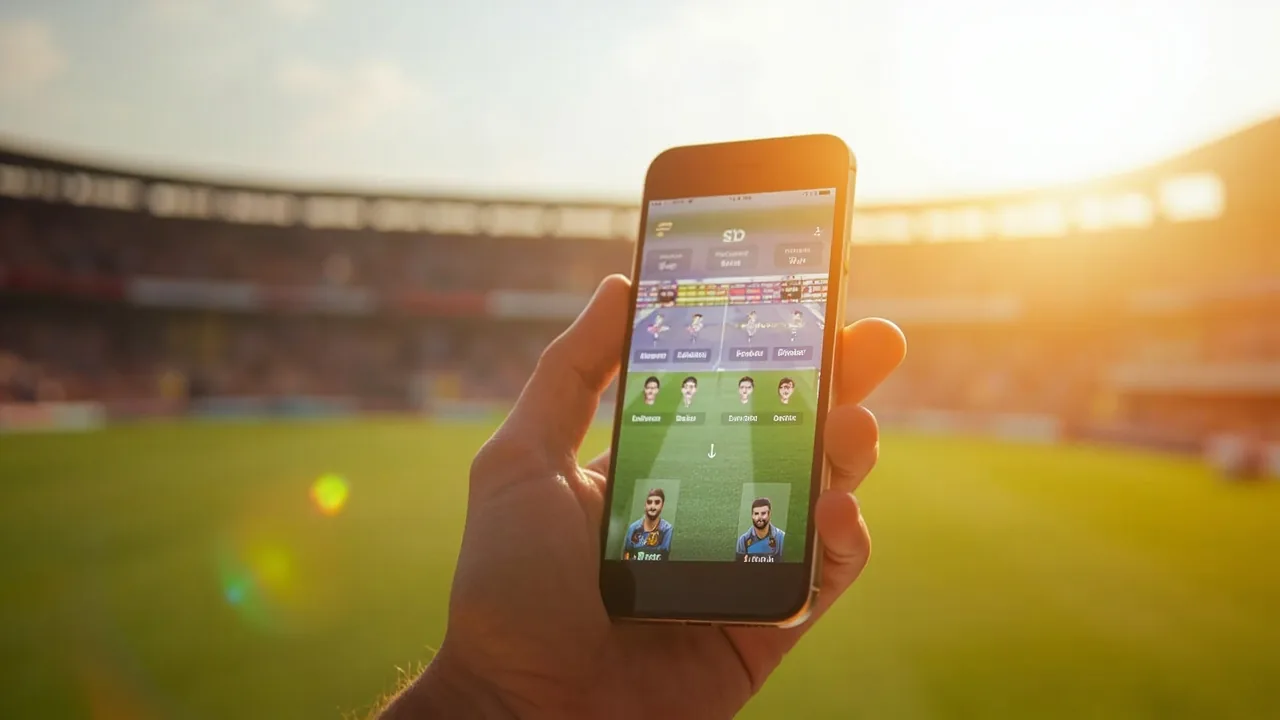
A phone showing the official domain in the address bar.
Verify the URL

How to confirm you're on our actual site before you read

1 · Match the domain exactly

The official domain is iplfantasypicks.com. Subdomains are fine; lookalike domains (e.g. iplfantasypick.com, iplfantasypicks-login.com, iplfantasypicks.net) are not the same site. Type the URL manually rather than following a forwarded link.

2 · Look for the canonical link

Every page on our site includes a self-referencing canonical link in the HTML head. You can usually find it by viewing the page source or by tapping "site settings" in your browser. The canonical should match the URL bar exactly.

3 · Trust the navigation

On the official site, every link in the navigation goes to a page on iplfantasypicks.com. Links to other domains are usually within editorial articles (e.g. a franchise tweet or a Wikipedia reference) — never on the navigation itself.

4 · If you're unsure, go to the home page

If you land on a page that claims to be us and you're not sure, navigate manually to iplfantasypicks.com. From there, every link is one of ours. If the page you started on isn't reachable from the home page, it isn't ours.

Frequently asked

Questions our readers ask

Yes. The only official website for our editorial work is iplfantasypicks.com. Any other domain publishing pages under our brand is not us and should be treated with suspicion.

Two checks: (1) the URL bar shows iplfantasypicks.com exactly; (2) the page links back to iplfantasypicks.com in its footer or its canonical. Any URL that does not match exactly — including ones that look similar (e.g. iplfantasypicks-login.com) — is not us.

We publish on this site. We do not maintain separate domains, mirror sites, or app store listings under the IPL Fantasy Picks brand. If you find one, please report it to the search engine and to our editorial inbox.

Common impersonation patterns

Four URL patterns that mean walk away

1 · Hyphenated lookalike

A URL like ipl-fantasy-picks.com or iplfantasy-picks.com (with an extra hyphen) is a common impersonation pattern. The brand's official URL is iplfantasypicks.com — single word, no hyphens. Anything else is suspect.

2 · Domain-extension swap

A URL like iplfantasypicks.net, iplfantasypicks.org, iplfantasypicks.co.uk or iplfantasypicks.in is a different domain. We don't operate from any of them. The official domain is .com.

3 · Subdomain impersonation

A URL like login.iplfantasypicks.scam-site.com is a subdomain on a different domain. The top-level domain (after the last dot) is what counts — and "scam-site.com" is not iplfantasypicks.com. Look at the part after the last dot in your URL bar.

4 · IDN homograph

Some impersonation URLs use internationalised domain names (IDNs) that look like the real brand but use characters from other scripts. The URL bar will show the characters. If you see characters that don't match English (e.g. Cyrillic letters instead of Latin), the URL is a homograph attack. Walk away.

Browser checks

Three browser settings that help you verify URLs

1 · Show the full URL always

Most mobile browsers hide the URL bar by default. Configure your browser to show the URL bar at all times, and look at it before you tap any link. The URL bar is your single most important safety check.

2 · Enable phishing protection

Modern browsers include phishing protection — a list of reported phishing URLs that the browser checks against before loading the page. Make sure this is enabled (it usually is by default).

3 · Use a password manager

A password manager won't autofill credentials on a phishing URL — it only fills on the legitimate domain. If you reach a "login" page and your password manager does not autofill, treat it as suspect.

Worked example

How the desk actually applies this in a single match

Step 1 · Read the pre-toss frame

A real pre-toss frame on the desk covers the venue (Chepauk, slow turner, dew moderate), the weather (32°C, hazy), the workload notes (Bumrah held to 3 overs, ankle tight), and the open questions (which spinner opens the bowling for the away side). The frame is anchored to public inputs; any input that is not public is not in the frame.

Step 2 · Build the captain shortlist

The captain shortlist is built from the Tier 1, 2, 3 ladder. Tier 1 is the safer captain pool — role-locked, low-volatility. Tier 2 is the moderate-volatility pool — usually allrounders or impact-player slots. Tier 3 is the high-volatility pool — usually role-fluid allrounders or anchors who might be promoted.

Step 3 · Update after the toss

After the toss and confirmed XI, the captain matrix is updated. If the side batting first wins the toss and goes in, the chasing captain pool widens (because of dew). If the chasing side wins and bowls, the captain pool compresses (because the chase-friendly read is gone).

Step 4 · Re-evaluate after the powerplay

After the powerplay, the captain matrix is re-evaluated for the bowlers who have bowled (if any) and the batters who have batted (if any). The differential pool may shift — if a fast bowler is moving the ball on overcast conditions, the differential captain shifts to the powerplay anchor.

Step 5 · Publish the post-match audit

After the match ends, the post-match audit is published within four hours. The audit covers the pre-toss frame, the actual outcome, the captain matrix delta, and the desk's edit for the next match. The audit is what compounds across the season.

Step 6 · Track the delta over the season

The audit feeds the desk's rolling confidence score. The score is published quarterly with its limitations named. Reading the score is how readers know where the desk's reads are stronger or weaker — and where to size their own calls accordingly.

Frequently asked

What readers ask us about this page

Why is this page on the site if you don't operate anything?

Because readers ask. The page exists to answer the verified questions readers send to the editorial desk, in plain language, with the limitations of what we publish named openly. We treat the access pages the same as the editorial pages — anchored to sources, labelled, and corrected when wrong.

How do I know the desk actually reads every question?

We publish a monthly editor's note that lists the questions received and the answers published. The note is part of the desk's public record — it is not deletable. You can see the same questions the editor saw, and the same answers that were published.

What if I disagree with something on this page?

Send a correction or a counter-view to the editorial inbox. We verify the input, publish a dated correction note if needed, and credit the source. The correction log is open; readers can see every correction and the reason for it.

Is any of this page written by AI?

No. Every page on this site is reviewed by an editor before publication. AI tools may be used in the research pipeline (data summarisation, sample-size checks); the editorial prose is human-written, edited, and signed off. We do not publish AI-generated prose without editorial review.

Reading support

Where to read more from this desk

The predictions hub

The predictions hub covers every fixture's pre-toss frame, post-toss update, captain matrix and post-match audit. The hub is the most-read section of this desk. Reading the predictions hub weekly keeps your calibration of the desk current.

The fantasy-tips hub

The fantasy-tips hub covers the decision framework that powers the captain matrix: role confidence, credit balance, contest strategy and deadline discipline. Read it before you lock a team; the framework compounds across a season.

The match desk

The live-matches desk is the read-every-match-day hub. It carries the day's fixtures, the captain matrix updates and the mid-innings notes. Bookmark it on match days.

Play now