News
CSK name Ruturaj Gaikwad as confirmed captain
The franchise ended weeks of uncertainty with a formal announcement. The squad rotation question is the open one.
Long-form editorials, methodology notes, post-match audits and field reports from the desk. Free to read, source-first, with corrections logged.

The franchise ended weeks of uncertainty with a formal announcement. The squad rotation question is the open one.

A full net session Thursday; the workload question is the open one for fantasy teams.
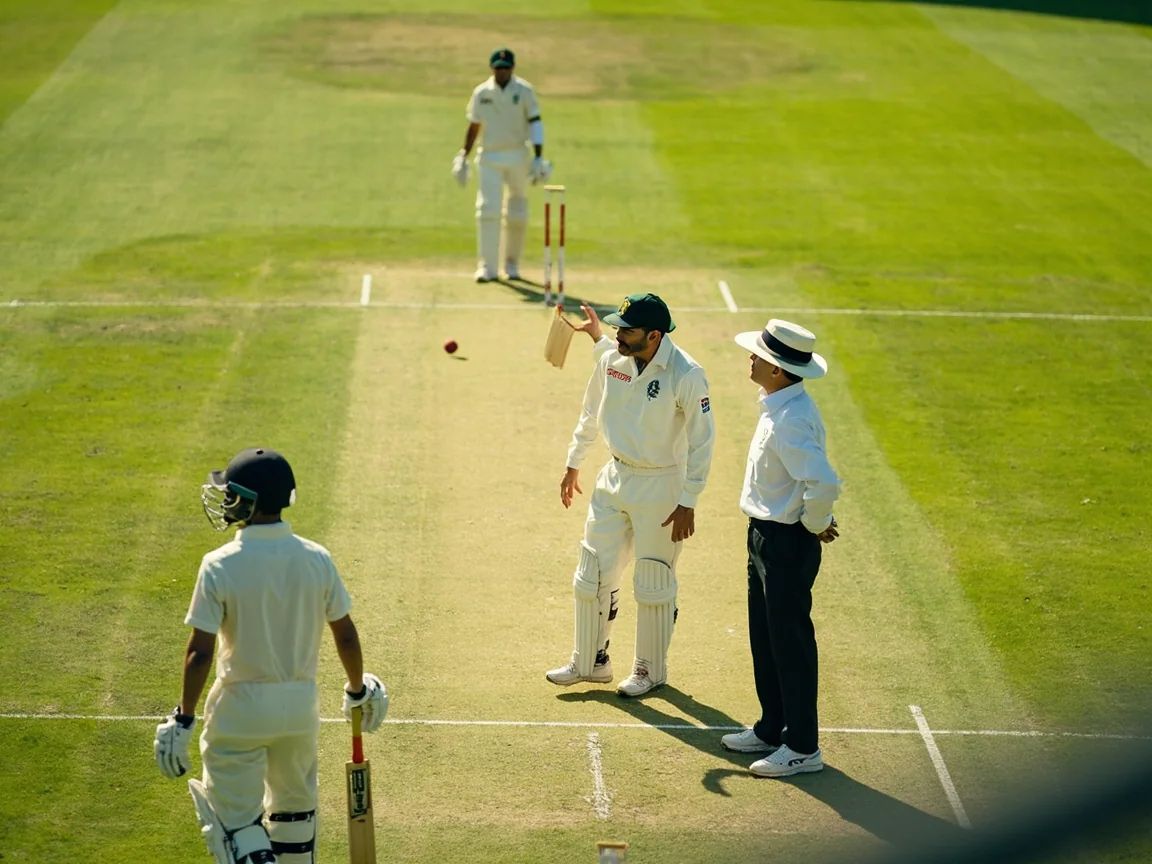
A typically flat Ahmedabad surface with possible dew. The captain pool widens across three allrounders.

Rain cut the game short but the powerplay cushioned the DLS par. Read the phase-by-phase replay.

Phase-by-phase numbers explain why the GT opener is a default captain pick on flat decks.

Plain-language checklist: regulator listing, published terms, support responsiveness, three red flags.

A short methodology note on the four-step audit the desk publishes after every match.
Read article →
Five moves the desk applies on slow surfaces — including the wrist-spinner captain and the part-time bowler exclusion.
Read article →2,000-3,000 word pieces that take a single desk topic and walk through the methodology, the inputs, the decisions and the audit. The reads are anchored to public sources and corrected when wrong.
Short essays on the desk's working methods — how the captain matrix is built, how the audit ladder works, how the verification ladder is applied. The methodology notes are for readers who want to understand the desk's frame.
Brief and deep audits on the highest-impact matches. The brief audit is published within 90 minutes of every match; the deep audit is published weekly. The audit is what compounds across the season.
What the desk sees that doesn't fit a structure — a venue quirk, a workload note, a post-toss pattern. Field notes are short and dated; readers can track how the patterns shift across the season.
Blog articles are published on editorial beats — predictions, fantasy-tips, news categories — and indexed on the blog landing page (this page). Each article links back to the relevant beat and the related coverage graph.
Our editorial desk. Every blog article is reviewed by an editor before publication; corrections are added with dated notes; AI is not used to write the prose without editorial review.
We don't run a paid newsletter. The blog is freely reachable via the site navigation; readers can bookmark the blog index or follow the news beat pages for updates.
Every page on this site connects to the editorial graph — captain matrices link to predictions, predictions link to fantasy tips, fantasy tips link to player profiles, player profiles link to team desks, team desks link to venue reads. Reading the desk's coverage weekly keeps your calibration of the framework current.
This page is one node in the graph. When the inputs on this page change, the related coverage is updated. The change log is published in the editor's monthly note; readers can see the run of changes across the desk.
From this page, the most useful next reads are: (1) the predictions hub for today's captain matrix; (2) the fantasy-tips hub for the decision framework; (3) the team desks for the squad-level reads; (4) the verification pages for safety guidance on third-party products.
Each of those is one click away from this page — the link is in the page footer, in the navigation bar, or in the related-coverage section of this page. Bookmark the desk-level landing pages for fast access; bookmark the article-level pages for deep reads.
The editor reads every input before the page publishes. Inputs include public sources, the desk's previous reads, and any source-tip submissions. The editor labels every input as confirmed, reported, or projected.
The editor runs the verification ladder on every claim. Confirmed (verified, on the record), reported (single-source, on the record), projected (analyst inference), editorial lean (weighted view across inputs).
The editor writes the desk's read with a confidence tag (high, moderate, cautious, no call). The confidence tag is published at the top of the read; readers can size their own calls against the tag.
The editor signs off on the captain matrix and the audit ladder. The audit ladder feeds the desk confidence score; the score is published quarterly with its limitations named.
The desk cannot guarantee fantasy outcomes. Fantasy is uncertain by nature; the desk's reads are probabilities, not certainties. We label every read with a confidence tag and never use certainty language.
The desk is limited to public sources. We don't have access to private net sessions, undisclosed injuries, or unreleased squad information. When the inputs are not public, the read is held.
The desk writes with humans and carries implicit biases. We minimise bias by anchoring to named inputs and a named verification ladder. We publish the editor's monthly note so readers can see the bias and the track record.
A read at 09:00 IST may be obsolete by 17:00 IST. The desk updates the captain matrix as soon as the inputs change. Freshness of any single page is bounded by the freshness of the inputs it depends on.
If you build fantasy teams daily, this page is in your morning reading. The captain matrix updates throughout the day; reading it before locking your team is the highest-leverage single action you can take.
If you build fantasy teams weekly, this page anchors your week. The desk publishes weekly recaps that summarise the reads from the previous seven days. The recap is the cheapest way to catch up if you missed the week.
If you read for tournament-level context, this page is one node in the editorial graph. The desk's quarterly audit aggregates the reads across the whole season; the publication is on the desk dashboard.
If you read occasionally, this page is the entry point to the desk. Bookmark the homepage or the predictions hub; come back when there's a specific question. The desk's coverage is free to read at any time.
Every claim on this page is labelled confirmed, reported or projected. We do not publish composite statements without naming the data window; we do not publish any framing that implies certainty without verification.
If this page is wrong, the correction is published at the top with a dated note. The note explains what changed, when, and why. Corrections are not deletable.
Every input on this page is cross-checked against at least one independent source where possible. Single-source stories are tagged reported; we do not publish anonymous tips.
An editor reads this page before publication. The editor signs off on the captain matrix, the audit ladder, and the verification tags. The editor's note is published monthly.